
You Have Heard the Word IVF a Hundred Times. But Nobody Has Actually Walked You Through It.
Most fertility content talks about IVF like it is one thing that either works or does not. In reality, IVF is a sequence of distinct steps, each with its own science, its own timeline, and its own emotional weight.
When you understand what is happening at each stage, the process stops feeling like something being done to you and starts feeling like something you are doing with your doctor.
Here is the full picture.
IVF Cycle Timeline at a Glance
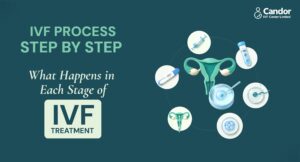
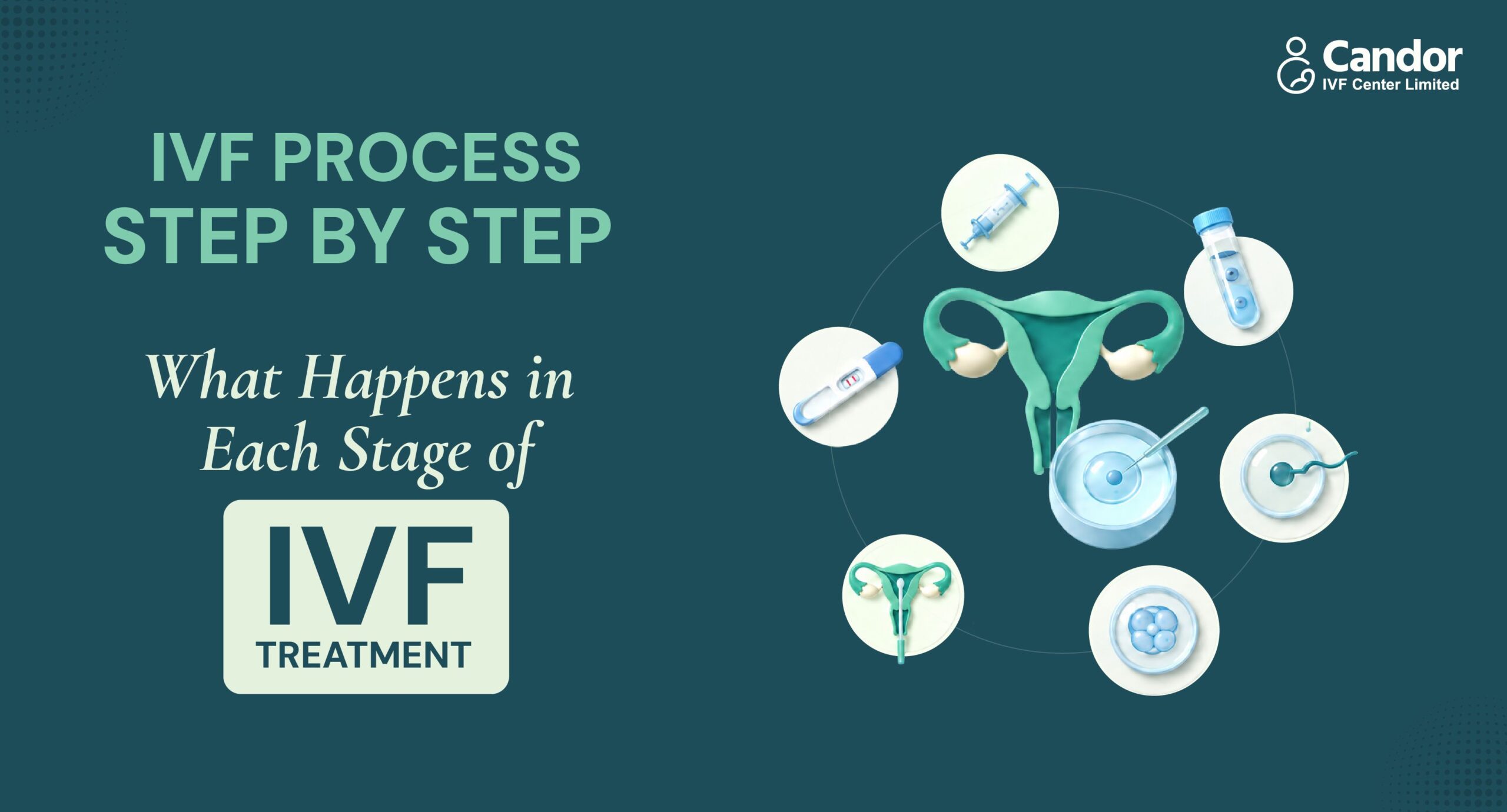
A complete IVF cycle from the first injection to the pregnancy test takes 15 to 20 days for a fresh transfer. Including the initial consultation and diagnostics, the full journey from first appointment to first result is typically 6 to 10 weeks.
Step 1: Initial Consultation and Fertility Assessment
Before anything begins, your doctor needs the complete picture of both partners.
For the woman: hormonal blood tests on Day 2 or 3 of the cycle, an AMH test to assess ovarian reserve, antral follicle count via ultrasound, and tubal assessment.
For the man: semen analysis covering count, motility, and morphology. In cases of previous IVF failure, a sperm DNA fragmentation test is also recommended.
This workup is not a formality. The medication dose, the protocol design, and whether ICSI will be needed are all decided from these results.
Step 2: Ovarian Stimulation (Days 1 to 12)
In a natural cycle, your body matures one egg per month. IVF asks the ovaries to produce multiple mature eggs in a single cycle, giving the lab more embryos to work with.
This is done through daily hormonal injections, typically gonadotropins, starting from Day 1 or 2 of your period. They continue for 8 to 12 days. You will have monitoring appointments every 2 to 3 days: blood tests for hormone levels and ultrasounds to track follicle growth.
When follicles reach the right size (18 to 20mm), your doctor gives a trigger shot of hCG for final egg maturation. Egg retrieval is scheduled exactly 36 hours later.
Common side effects: bloating, breast tenderness, mild cramping. Expected, not alarming.
Step 3: Egg Retrieval Procedure
A short day procedure, 15 to 25 minutes, under light sedation. You feel nothing during it.
Using transvaginal ultrasound, a fine needle is guided into each follicle to aspirate the fluid containing the egg. The fluid goes directly to the embryology lab where the embryologist isolates the mature eggs.
You rest for about an hour and go home the same day. On average, 70% of mature eggs retrieved will fertilize successfully.
Step 4: Sperm Collection and Preparation
On the same day as egg retrieval, the male partner provides a semen sample. The lab processes it over 1 to 2 hours, isolating the most motile and morphologically normal sperm for fertilization. In cases of azoospermia, sperm is retrieved surgically through TESA or PESA.
Step 5: Fertilization, IVF vs ICSI
Two methods exist.
Conventional IVF: Eggs and prepared sperm are placed together in a dish and allowed to fertilize naturally. Used when sperm parameters are normal.
ICSI: A single healthy sperm is injected directly into each mature egg using a fine needle. Recommended for male factor infertility, low sperm count, poor morphology, or a history of low fertilization in previous cycles.
The next morning, the embryologist checks for fertilization. A normally fertilized egg shows two pronuclei, one from the egg and one from the sperm. This embryo is now ready for culture.
Step 6: Embryo Culture and Grading, Day 3 vs Day 5
Embryos are cultured in incubators that replicate the environment of the fallopian tube: temperature, oxygen levels, carbon dioxide, and nutrients.
Day 3 embryo: 6 to 8 cells. Some clinics transfer at this stage when fewer embryos are available.
Day 5 blastocyst: A more advanced stage with a distinct inner cell mass. Research consistently shows blastocyst transfers yield higher implantation rates than Day 3 transfers, because only embryos with genuine developmental strength reach Day 5.
Embryos are graded on cell number, symmetry, and fragmentation. The best blastocyst is selected for transfer. Remaining good-quality embryos are vitrified and stored for future cycles.
Step 7: Embryo Transfer
No anaesthesia needed. The procedure takes 10 to 15 minutes and is typically painless.
A thin catheter is passed through the cervix into the uterus under ultrasound guidance. The embryo is placed at the precise point in the uterine cavity.
Fresh transfer: Done 3 to 5 days after retrieval in the same cycle.
Frozen embryo transfer (FET): The embryo is thawed and transferred in a later cycle after the uterine lining is prepared with estrogen and progesterone support for 2 to 3 weeks.
Many clinics now prefer FET in specific cases, as a rested uterus often responds better to implantation.
Step 8: The Two-Week Wait and Pregnancy Test
Implantation typically occurs 1 to 5 days after transfer. The beta hCG blood test happens 9 to 14 days after the transfer date.
Do not rely on home pregnancy tests during this period. The trigger shot contains hCG and will cause false positives if tested too early. Wait for the blood test. Your clinic will give you the exact date.
If positive, a repeat hCG and a 6-week ultrasound confirm a viable pregnancy.
If negative, it is diagnostic data, not a dead end. Your doctor will review what happened at each stage and adjust the protocol for the next attempt.
IVF Process FAQs
- How many days does one IVF cycle take in India?
– 15 to 20 days from the first injection to embryo transfer, plus 9 to 14 days more for the pregnancy test. - Is egg retrieval painful?
– No. It is done under sedation. Mild cramping for 24 to 48 hours after is normal. - What is the difference between IVF and ICSI?
– In IVF, sperm fertilizes the egg naturally in a dish. In ICSI, a single sperm is injected directly into the egg. ICSI is used when sperm parameters are poor. - Is Day 5 blastocyst transfer better than Day 3?
– In most cases, yes. Blastocyst culture allows natural selection of the strongest embryos and results in higher implantation rates. - What happens to extra embryos?
– Good-quality embryos that are not transferred are frozen for future FET cycles, at a fraction of the cost of a full fresh cycle.
At Candor IVF, You Know What Is Happening and Why, at Every Step
IVF is not something that happens to you behind a closed lab door. Every decision, from stimulation dose to transfer timing, affects your outcome. You deserve to understand each one before it is made.
At Candor IVF in Surat, we walk you through every step before it happens. Not after.
Book your consultation. Walk in knowing exactly what to expect.
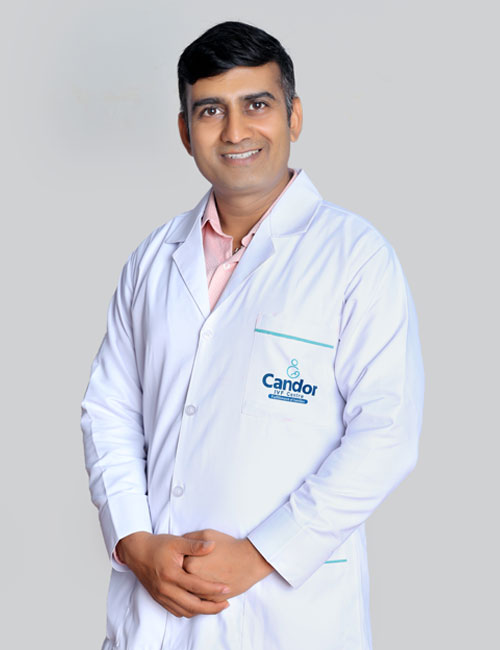
Dr. Jaydev Dhameliya is an IVF consultant and reproductive medicine specialist with over 17 years of clinical experience helping couples on their journey to parenthood. He holds an MBBS and DGO, and is a Fellow in Minimal Access Surgery (FMAS), a trained laparoscopic surgeon. As Founder and Director of Candor IVF, he specialises in IVF, infertility treatment, laparoscopic gynaecological surgery, and high-risk pregnancy management. Every article he authors or reviews reflects current medical evidence and his hands-on patient experience.