
A high-risk pregnancy is one that comes with higher health risks for the expectant mother, the baby, or both. To minimize the possibility of complications, these pregnancies need to be closely monitored.
Table of Contents
ToggleWhat is a high-risk pregnancy?
Every pregnancy involves risk. A “high-risk” pregnancy is one that has higher health risks for the expectant mother, the baby, or both. High-risk pregnant women may require more care before, during, and after delivery. By doing this, the chance of consequences is decreased.
However, a high-risk pregnancy does not guarantee that you or your baby will experience difficulties. Numerous people have safe pregnancies and regular labor and delivery procedures while having exceptional health demands.
List of high-risk pregnancy conditions
- Disorders of the mind, such as depression.
- Overweight.
- Polycystic ovarian syndrome (PCOS).
- Thyroid condition.
- Problems of blood clotting.
- COVID-19.
- Diabetes.
- Low body fat (BMI of less than 18.5)
- Fibroids.
- Higher blood pressure
- HIV/AIDS.
- Kidney infection
High-risk pregnancy do’s & don’ts
Do’s
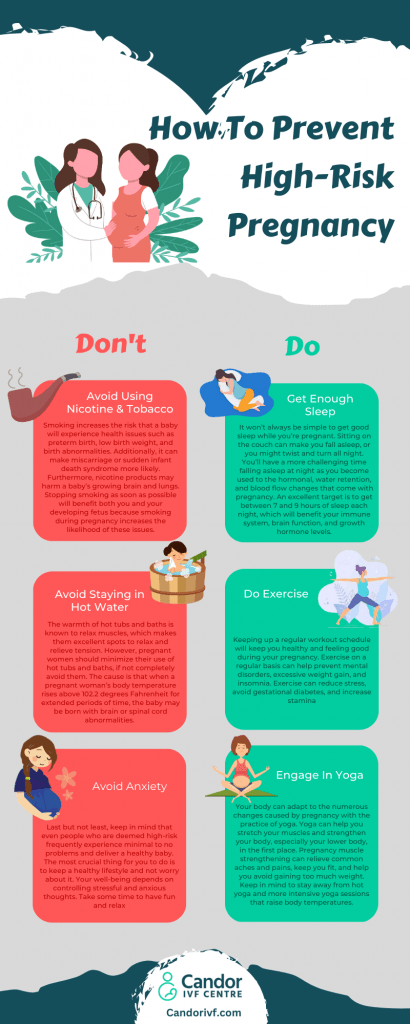
- Get enough sleep – It won’t always be simple to get good sleep while you’re pregnant. Sitting on the couch can make you fall asleep, or you might twist and turn all night. You’ll have a more challenging time falling asleep at night as you become used to the hormonal, water retention, and blood flow changes that come with pregnancy. When you feel sleepy, take a little nap, and add a few extra hours of sleep to your plan. An excellent target is to get between 7 and 9 hours of sleep each night, which will benefit your immune system, brain function, and growth hormone levels.
- Exercise – Keeping up a regular workout schedule will keep you healthy and feeling good during your pregnancy. Exercise regularly can help prevent mental disorders, excessive weight gain, and insomnia. Additionally, there is proof that exercise can reduce stress, prevent gestational diabetes, and increase stamina. If you were a regular exerciser prior to becoming pregnant, you might discuss keeping up that program with your doctor. However, if you didn’t exercise much before becoming pregnant, your doctor will work with you to find methods to include exercise in your daily schedule.
3. Engage in yoga – Your body can adapt to the numerous changes caused by pregnancy with the practice of yoga. Yoga can help you stretch your muscles and strengthen your body, especially your lower body, in the first place. Pregnancy muscle strengthening can relieve common aches and pains, keep you fit, and help you avoid gaining too much weight. Keep in mind to stay away from hot yoga and more intensive yoga sessions that raise body temperatures.
Don’ts
- Avoid using nicotine or tobacco – First and foremost, avoid using tobacco while pregnancy. Smoking increases the risk that a baby will experience health issues such as preterm birth, low birth weight, and birth abnormalities. Additionally, it can make miscarriage or sudden infant death syndrome more likely. Furthermore, nicotine products may harm a baby’s growing brain and lungs. Stopping smoking as soon as possible will benefit both you and your developing fetus because smoking during pregnancy increases the likelihood of these issues.
- Avoid staying in hot water – The warmth of hot tubs and baths is known to relax muscles, which makes them excellent spots to relax and relieve tension. However, pregnant women should minimize their use of hot tubs and baths, if not completely avoid them. The cause is that when a pregnant woman’s body temperature rises above 102.2 degrees Fahrenheit for extended periods of time, the baby may be born with brain or spinal cord abnormalities.
- Avoid Anxiety – Last but not least, keep in mind that even people who are deemed high-risk frequently experience minimal to no problems and deliver a healthy baby. The most crucial thing for you to do is to keep a healthy lifestyle and not worry about it. Your well-being depends on controlling stressful and anxious thoughts. Take some time to have fun and relax, and if you find it difficult to control your anxiety, our caring OB/GYN professionals will support you every step of the way.
The team at Candor IVF Center is dedicated to your and your expectant child’s well-being. Call one of our convenient locations or set up a consultation right away if you need assistance, want to know if you are high-risk, or just want to speak with a specialist.
Frequently Asked Questions
Q1: What is a high-risk pregnancy?
A1: A high-risk pregnancy involves health conditions that threaten the mother, baby, or both. Risk factors include age over 35, diabetes, hypertension, multiple pregnancies, and previous complications.
Q2: How can I prevent a high-risk pregnancy?
A2: Maintain healthy weight, control blood pressure and diabetes, take prenatal vitamins, avoid smoking and alcohol, attend regular checkups, and manage any pre-existing medical conditions.
Q3: Does IVF increase the risk of high-risk pregnancy?
A3: IVF pregnancies may have slightly higher risks due to maternal age and multiple embryo transfers. However, single embryo transfer and proper monitoring significantly reduce these risks.
Q4: What are the warning signs of a high-risk pregnancy?
A4: Watch for severe headaches, vision changes, excessive swelling, vaginal bleeding, decreased fetal movement, severe abdominal pain, and persistent vomiting. Seek immediate medical attention.
Q5: How often should high-risk pregnancy patients visit the doctor?
A5: More frequent visits are needed — typically every 1-2 weeks in the second trimester and weekly in the third trimester. Your doctor will create a monitoring schedule based on your specific risks.