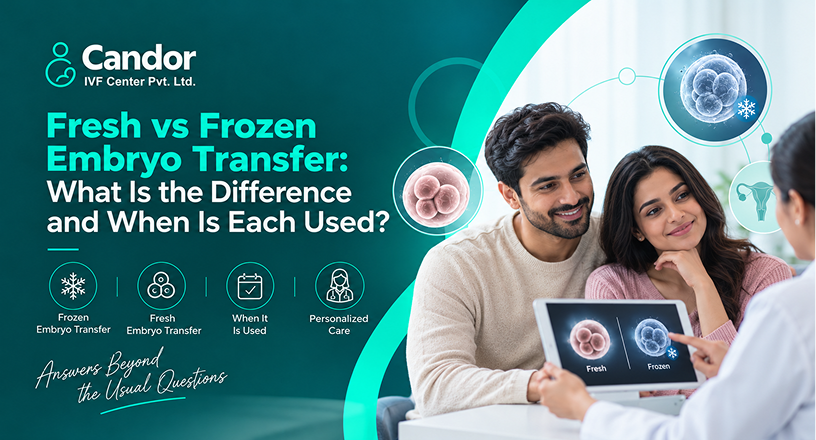


Fresh vs Frozen Embryo Transfer: What Is the Difference and When Is Each Used?

Fresh vs Frozen Embryo Transfer What Is the Difference and When Is Each Used

Dr. Jaydev Dhameliya

October 5, 2026

Last Updated – October 6, 2026

Medically reviewed and authored by Dr. Jaydev Dhameliya.

Once embryos are ready in the lab, couples are often surprised to learn that the transfer will not always happen right away. Fresh and frozen embryo transfer are both proven paths to pregnancy, but they suit different situations, and the choice between them is a clinical decision rather than a matter of preference.

A fresh embryo transfer takes place in the same cycle as the egg retrieval, usually three to five days later once the embryo reaches the cleavage or blastocyst stage. There is no pause between stimulation, retrieval, and transfer. This was traditionally the default approach in IVF, largely because it was the only option before reliable freezing techniques existed.

What Frozen Embryo Transfer Means

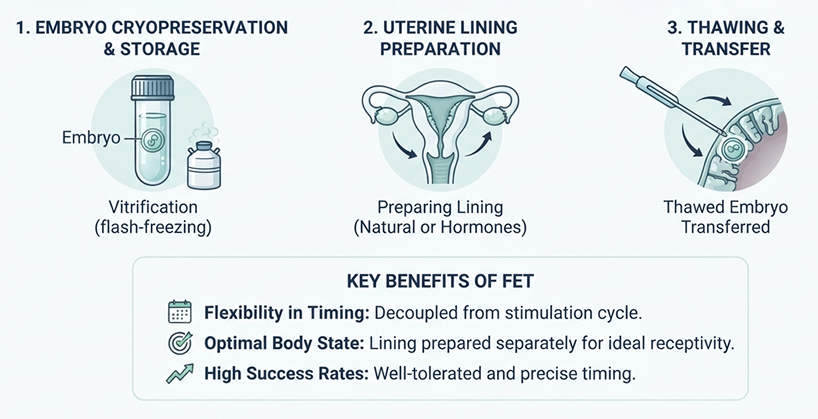
A frozen embryo transfer, or FET, involves cryopreserving the embryo through vitrification and transferring it in a later cycle, once the body has recovered from stimulation. The uterine lining is prepared separately, either naturally or with hormone support, and the embryo is thawed and transferred once the lining is ready. Because the transfer is decoupled from stimulation, there is far more flexibility in timing it for when the body is in an optimal state.

Why the Uterine Environment Matters More Than Timing Alone

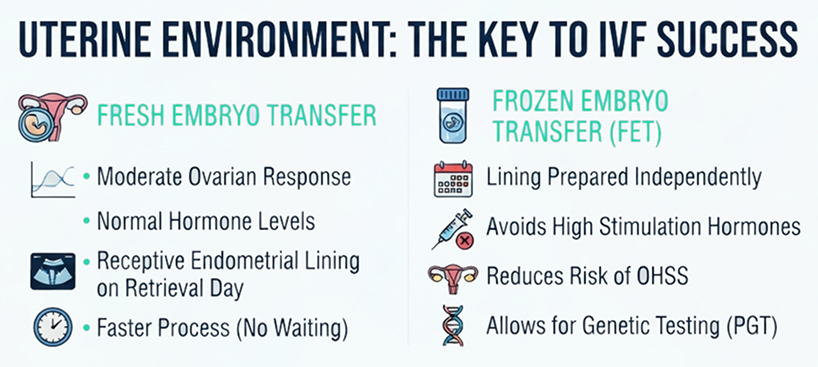
Ovarian stimulation medication raises hormone levels well above what occurs naturally, and this can make the uterine lining less receptive right when a fresh transfer would happen. In a frozen cycle, the lining is prepared independently, away from stimulation drugs, which in some patients creates a more favorable environment for implantation. This is one reason frozen transfers have become increasingly common even without a specific medical reason to freeze.

Fresh transfer tends to be the better fit when ovarian response is moderate, hormone levels stay within a normal range, and the endometrial lining looks receptive on scan at retrieval. It also suits couples who prefer to finish the process without extending the timeline over multiple cycles.

Frozen transfer is generally recommended when the ovaries respond strongly and there is a risk of Ovarian Hyperstimulation Syndrome, since freezing all embryos avoids compounding that risk with pregnancy hormones. It is also preferred when progesterone rises too early, when the lining is not optimal on the retrieval-day scan, or when genetic testing is planned and needs extra days for results.

Why the Uterine Environment Matters More Than Timing Alone

How Candor IVF Center Decides Between the Two

At Candor IVF Center, this decision is never made by default. The fertility specialist reviews hormone levels, follicle response, and endometrial thickness recorded during monitoring before recommending a fresh or frozen approach for that cycle. Patients at higher risk of OHSS or with elevated progesterone are guided toward a freeze-all strategy, while those with a well-responding cycle and receptive lining are often supported through a fresh transfer instead. Either way, the embryology lab’s vitrification protocols and time-lapse monitoring ensure embryos held back for later are frozen at their strongest stage, so choosing frozen over fresh is never a compromise on quality.

Conclusion

Neither fresh nor frozen embryo transfer is universally better. The right choice depends on how the body responded to stimulation, what hormone levels and scans show at retrieval, and whether there is a specific reason to wait. What matters most is that the decision is guided by your actual cycle data rather than a fixed default. If you want to understand which approach fits your situation, a review with the specialists at Candor IVF Center can help you plan the transfer that gives you the best chance of success.

FAQ

Is frozen embryo transfer less effective than fresh transfer?

Not necessarily. With vitrification and Candor IVF Center’s embryology protocols, frozen transfers often show success rates comparable to, or better than, fresh ones.

Why would my doctor recommend freezing all embryos instead of a fresh transfer?

This is usually done to avoid OHSS risk or when hormone levels suggest the lining will not be receptive during a fresh transfer.

How long do I need to wait between retrieval and a frozen transfer?

This varies by patient, but most frozen transfers happen after one to two months, once the body has recovered from stimulation.

Can I choose fresh transfer even if my doctor recommends freezing?

Your preference is heard, but the final recommendation from Candor IVF Center is based on protecting your health and giving embryos the best chance to implant.

Does genetic testing always require a frozen transfer?

Yes. Testing embryos takes a few days for results, so a frozen transfer is used once the report confirms which embryo is suitable to transfer.

Blogs