PCOS Does Not Mean You Cannot Get Pregnant. It Means the Route Is Different.
That is the one sentence most women with PCOS needed to hear at the beginning and nobody said it clearly enough.
PCOS is the most common hormonal disorder in women of reproductive age. India has seen approximately a 30% rise in PCOS prevalence in recent years, ranking among the top five countries globally for incident cases. Prevalence ranges from 7.2% to 19.6% depending on diagnostic criteria, with the highest rates in urban Central and North India.
Most of these women will go on to have babies. With the right information and the right plan.
What PCOS Actually Does to Your Fertility
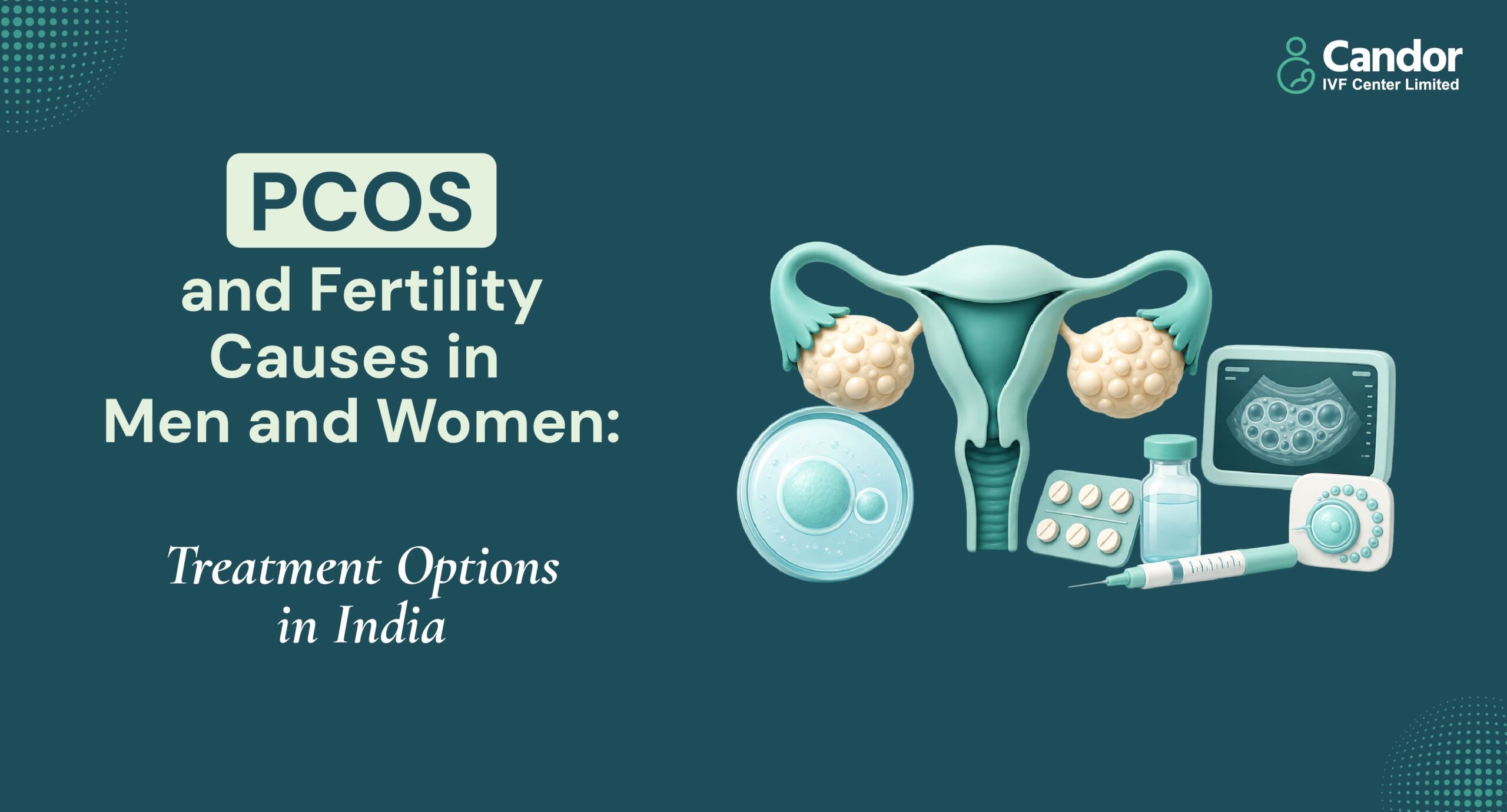
PCOS disrupts ovulation. That is the core fertility problem.
In a normal cycle, one follicle matures and releases an egg. In PCOS, multiple small follicles develop but none of them fully mature. No egg is released. No egg means no fertilization. This is called anovulation, and it is the primary reason PCOS is associated with difficulty conceiving.
The hormonal picture behind this involves elevated LH, insulin resistance, and excess androgens, all of which interfere with the signaling that triggers ovulation. Irregular or absent periods are usually the first visible sign.
Importantly, PCOS does not damage eggs or the uterus. Women with PCOS generally have a healthy uterine environment and a larger than average ovarian reserve. The problem is getting those eggs to ovulate. Once ovulation is triggered, naturally or medically, the path to pregnancy becomes much more straightforward.
PCOS Pregnancy Through Natural Conception: What Lifestyle Does and Does Not Do
For women with mild PCOS and only mild ovulation irregularity, lifestyle changes can restore ovulation on their own.
The two factors that matter most are body weight and insulin resistance. Even a 5 to 10% reduction in body weight in women with PCOS who are overweight has been shown to restore regular ovulation in a meaningful proportion of cases. This is because excess weight worsens insulin resistance, which directly worsens the hormonal imbalance driving PCOS.
For PCOS diet and fertility, the evidence supports a low glycaemic index diet, reduced refined carbohydrates, consistent physical activity, and adequate sleep. One supplement worth noting: myo-inositol, shown to enhance oocyte yield and pregnancy rates. Inexpensive and widely available.
If your periods are irregular and you have been trying for more than 6 months, do not wait for lifestyle alone. Move to medical intervention.
Medical Treatments for PCOS Fertility: Letrozole, Clomid, and Metformin
Letrozole (First Line)
The 2023 International Evidence-based Guideline for PCOS now recommends letrozole as the first-line pharmacological treatment for ovulation induction. It temporarily lowers estrogen, prompting the pituitary gland to release FSH, which stimulates one or two follicles to mature and ovulate.
Letrozole is taken for 5 days early in the cycle. Ovulation is then confirmed by ultrasound monitoring. Ovulation rates with letrozole in PCOS patients reach 70 to 85% per cycle. Cumulative pregnancy rates across 3 to 6 monitored cycles are strong.
Clomid (Clomiphene Citrate)
Clomid was the standard for decades before letrozole. It works similarly but has a higher rate of thinning the uterine lining, which is why letrozole is now preferred for PCOS specifically. Clomid remains a valid option and is widely available across India at low cost.
Metformin
Metformin improves insulin action, which helps resolve hormonal and metabolic problems and increases the chances of successful ovulation, pregnancy, and live births, especially when combined with clomiphene citrate. Continuing metformin into the first trimester may also help reduce the rate of miscarriage.
Metformin alone rarely induces ovulation in PCOS. It is most effective as a supporting medication alongside letrozole or during IVF preparation.
When to Move to IUI for PCOS Pregnancy
IUI is considered when ovulation induction with letrozole has not worked after 3 to 6 cycles, mild male factor issues are present, or tubes are confirmed open. Processed sperm is placed directly into the uterus at the time of triggered ovulation. Success rates in well-selected PCOS patients are 10 to 20% per cycle.
PCOS and IVF: Why the Protocol Is Everything
When letrozole and IUI have not worked, IVF Prossece. And PCOS requires a genuinely different IVF approach.
The biggest risk is OHSS. Because PCOS ovaries contain many small follicles, aggressive stimulation can trigger too many to develop at once.
PCOS-specific IVF protocols address this directly:
GnRH antagonist protocol with agonist trigger: This combination keeps stimulation controlled and allows a safer trigger shot that dramatically reduces OHSS risk compared to the standard hCG trigger.
Mild stimulation: Lower gonadotropin doses are used. Mild stimulation protocols combining oral agents with low-dose gonadotropins are effective alternatives to conventional protocols and are particularly relevant in PCOS where the risk of hyperstimulation is higher.
Freeze-all strategy: Rather than doing a fresh embryo transfer in the same cycle, all good embryos are frozen and transferred in a later cycle when the ovaries have calmed down. PCOS patients typically benefit from frozen embryo transfer cycles, which are more conducive for women with irregular cycles.
Metformin pre-treatment: Metformin used before and during IVF in PCOS patients increases pregnancy rates and reduces the risk of OHSS.
PCOS IVF success rates for women under 35 with no additional fertility factors are strong, often matching or exceeding the general IVF population, because PCOS women typically have higher egg counts. The challenge is not quantity. It is protocol design.
FAQs: PCOS and Pregnancy
- Can you get pregnant naturally with PCOS?
– Yes. Many women with PCOS conceive naturally when ovulation is restored through lifestyle or mild medical support. - What is the PCOS IVF success rate in India?
– For women under 35 with PCOS and no additional factors, live birth rates per cycle are 40 to 60% when the right protocol is used. - Is OHSS dangerous in IVF with PCOS?
– Severe OHSS is rare with modern protocols. GnRH antagonist cycles, agonist triggers, and freeze-all strategies have significantly reduced the risk. - What is the best diet for PCOS fertility?
– Low glycaemic index foods, reduced refined carbohydrates, regular physical activity, and myo-inositol supplementation are clinically supported. - How long does it take to get pregnant with PCOS?
– With medical support, many women conceive within 3 to 6 months of starting ovulation induction. IUI or IVF can extend the timeline to 6 to 18 months.
Candor IVF’s Approach to PCOS Fertility
PCOS is not one condition. It is a spectrum. Some women ovulate occasionally. Some never do. Some respond to letrozole in the first cycle. Some need full IVF.
At Candor IVF, every PCOS patient gets a protocol built around their AMH, antral follicle count, insulin levels, and history. Not a standard template.
Because a protocol designed for your PCOS is the only protocol that should be treating it.
Book your PCOS fertility consultation at Candor IVF today.
Dr. Jaydev Dhameliya is an IVF consultant and reproductive medicine specialist with over 17 years of clinical experience helping couples on their journey to parenthood. He holds an MBBS and DGO, and is a Fellow in Minimal Access Surgery (FMAS), a trained laparoscopic surgeon. As Founder and Director of Candor IVF, he specialises in IVF, infertility treatment, laparoscopic gynaecological surgery, and high-risk pregnancy management. Every article he authors or reviews reflects current medical evidence and his hands-on patient experience.