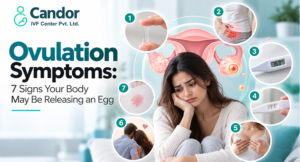


Ovulation Symptoms: 7 Signs Your Body May Be Releasing an Egg

Dr. Jaydev Dhameliya

October 23, 2026

Last Updated – October 16, 2026

Medically reviewed and authored by Dr. Jaydev Dhameliya.

Ovulation is the release of a mature egg from the ovary, and pregnancy is possible only in the fertile window around it. That window covers the five days before ovulation and the day of ovulation itself. The egg survives just 12 to 24 hours after release, while sperm can live for up to five days. Learning your body’s signals helps you time intercourse better and spot early when something in your cycle is off.

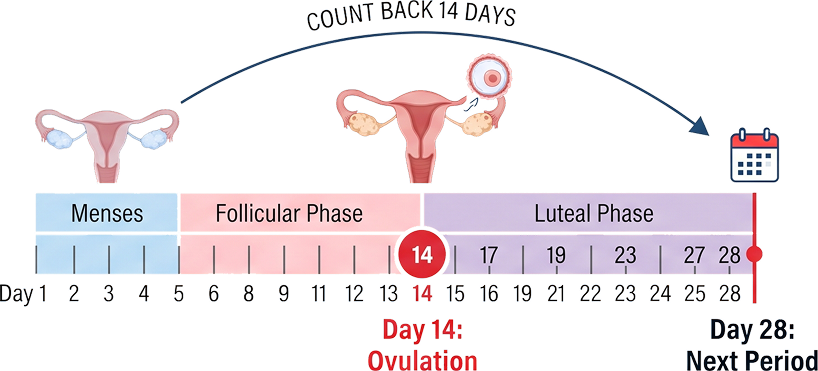
Ovulation usually occurs about 14 days before your next period, which is not always day 14 of your cycle. In a 28-day cycle it falls around day 14, but in a 32-day cycle it comes closer to day 18. Timing also varies between women and from cycle to cycle, since stress or illness can shift it. Counting back 14 days from your expected period is more dependable than counting forward from your last one.

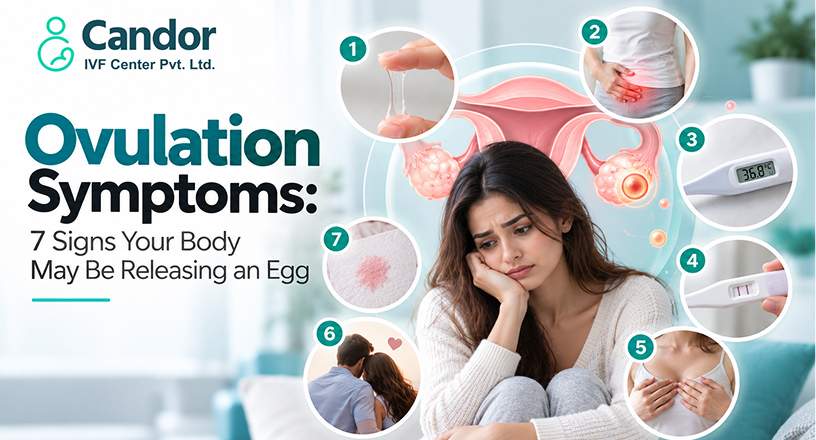
7 Signs You May Be Ovulating

1. Clear, stretchy cervical mucus

Rising estrogen turns cervical mucus thin, slippery and stretchy, much like raw egg white. This texture helps sperm travel and is one of the most reliable natural signs.
2. One-sided pelvic pain

Some women feel a brief twinge or dull ache low on one side of the abdomen as the follicle releases the egg. It usually passes within hours.
3. A rise in basal body temperature

Your resting temperature climbs by roughly 0.3 to 0.5 degrees Celsius after ovulation and stays up until your next period. This rise helps confirm that ovulation has already happened. It cannot reliably predict the next one, so it records past cycles rather than guiding your fertile days.

4. A positive ovulation kit

Predictor kits detect the LH surge in your urine, which usually comes about 24 to 36 hours before ovulation. A positive result suggests ovulation is near, but it does not guarantee that an egg will be released. It remains the most practical home method for planning.

5. Breast tenderness

Hormonal shifts at mid-cycle can leave your breasts feeling sore or heavy.

6. A higher sex drive

Many women notice stronger desire during their fertile days.

7. Light spotting

A little pink or light brown spotting at mid-cycle can appear when estrogen dips briefly after peaking. It is brief and very light.

Reading the Signs Together

No single sign proves ovulation. Cervical mucus, a positive kit and a later temperature rise are far more convincing when they line up in the same cycle. Jotting down what you notice for two or three months shows your own pattern, which is more useful than any general rule.

What If You Notice None of These?

Plenty of women never feel these signs, which does not mean ovulation is missing. But if your periods are irregular, far apart or absent, or you have been trying to conceive for 12 months (6 months if you are 35 or older), symptoms alone cannot show what is going on. In that situation a doctor-led evaluation gives clearer answers than waiting.

How Ovulation Is Confirmed at Candor IVF Center

The evaluation at Candor IVF Center starts with a conversation. Your doctor asks about your cycle length, its regularity and any earlier pregnancies, and then selects tests according to your cycle and clinical needs. Some women benefit from a follicular study, where ultrasound scans follow the growing follicle through the first half of the cycle and show whether it has released its egg. Others need blood tests, such as LH, FSH, estradiol or progesterone, and thyroid or prolactin tests may be added if cycles are irregular. Not everyone needs every test. Your doctor then explains what the findings mean, including whether and when you ovulate and whether treatment is needed.

FAQ

When should I start using an ovulation kit?

Begin about four days before your expected ovulation date and test once or twice a day until you get a positive result.

Can an ovulation kit give a wrong result?

Yes. A kit detects the LH surge, not the egg release itself, and women with PCOS can see several positive results without ovulating.

Can I ovulate if my periods are irregular?

Sometimes, but the timing is hard to predict, and irregular periods often mean ovulation is infrequent or absent. Home tracking is less reliable here, so a medical check helps.

Can I ovulate without noticing any symptoms?

Yes. Many women ovulate regularly without feeling a single sign, which is why testing is more reliable than symptoms alone.

When is the best time to have intercourse?

Every one to two days during the five days before ovulation and on the day of ovulation gives the best chance.

Can a temperature chart tell me my fertile days in advance?

Not reliably. It confirms ovulation after the rise, so it is better for understanding past cycles.

Know Your Pattern, Then Decide

Ovulation leaves small clues, and learning to read them gives you a steadier sense of when you are fertile. Track what you notice for a few cycles, use a predictor kit to narrow the timing, and treat the pattern as a guide, not a guarantee. If the signs stay unclear or your cycles are unpredictable, a fertility specialist can measure what symptoms can only suggest.

Blogs