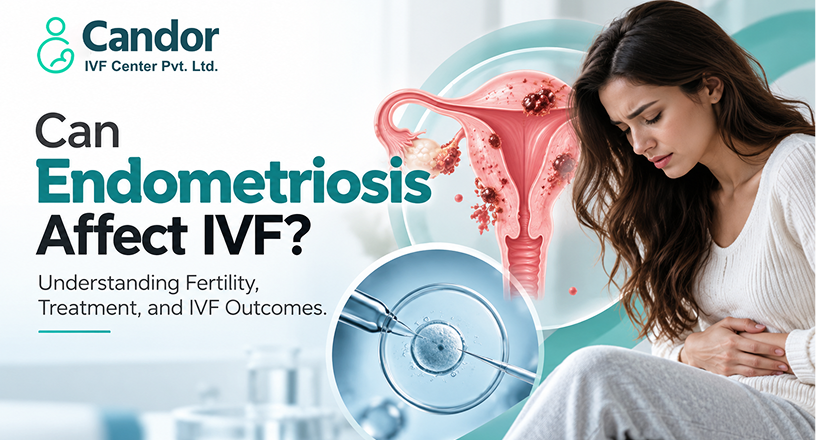
Endometriosis is one of the most common reasons women are referred for fertility treatment, affecting an estimated 10% of women of reproductive age worldwide. Yet many patients aren’t sure how the condition actually affects their chances with IVF. The short answer: it can influence several stages of the process, but a well-planned protocol accounts for this rather than being thrown off by it.
Table of Contents
ToggleHow Endometriosis Affects Fertility
Endometriosis occurs when tissue similar to the uterine lining grows outside the uterus, often on the ovaries, fallopian tubes, or pelvic lining. This tissue can cause inflammation, scarring, and adhesions that distort pelvic anatomy, making natural conception harder. Among women with laparoscopically confirmed endometriosis, 30-50% experience infertility, and women with infertility are up to 2.5 to 3.6 times more likely to have endometriosis than fertile women. Beyond the physical changes, the inflammatory environment can also affect egg quality and how the endometrium responds during a cycle, which is why endometriosis is treated as a fertility factor and not just a source of pelvic pain.
The Impact on Ovarian Reserve and Egg Quality
When endometriosis forms ovarian cysts, known as endometriomas, they can gradually reduce ovarian reserve, especially if surgery is later needed to remove them. AMH levels (a key ovarian reserve marker) decline roughly three times faster in women with untreated endometriomas than in unaffected women, around a 26% drop over six months versus 7-8% in healthy controls. Surgical removal adds to this: AMH commonly falls by another 20-40% in the months following cystectomy, with larger and bilateral cysts showing the steepest declines. Some recovery is possible over the following months, but levels rarely return fully to baseline. This is why surgery is such a delicate call, it can improve access to the ovaries during retrieval but also lower egg count further. Egg quality itself can be affected by the surrounding inflammatory environment, which is part of why specialists weigh the stage and location of the disease carefully before deciding on a path.
How Endometriosis Shapes the IVF Protocol
Egg retrieval can be more complex due to adhesions or altered pelvic anatomy, so the specialist plans ovarian access with extra care. Studies show women with endometriomas tend to yield somewhat fewer eggs per retrieval (around 8.5 vs. 9.5 in unaffected women).
Down-regulation protocols, where ovarian activity is suppressed with medication before stimulation begins, are sometimes used ahead of IVF, as this approach has shown benefit for some patients in improving response to treatment.
ICSI is frequently recommended as well, since it lets the embryologist inject a single sperm directly into the egg, bypassing fertilization challenges linked to endometriosis-related inflammation. This matters because a large 2024 meta-analysis of nearly 9,000 women with endometriosis and over 42,000 controls found no significant difference in live birth or clinical pregnancy rates between the two groups, but it did find a measurably lower embryo implantation rate. In other words, the disease appears to affect how well an embryo takes hold more than whether fertilization happens, which is exactly the gap careful protocol design aims to close.
How Candor IVF Center Approaches Endometriosis Cases
At Candor IVF Center, every patient with endometriosis undergoes a detailed evaluation of AMH, AFC, and pelvic imaging before a protocol is finalized, so the plan reflects the actual extent of the condition. Where surgery is being considered, the specialist weighs the benefit to egg retrieval access against the potential impact on ovarian reserve, and discusses this trade-off openly with the patient. Time-lapse monitoring and careful embryo grading in the lab help the team identify the strongest embryos and support implantation, even when egg count is on the lower side.
Conclusion
Endometriosis can influence ovarian reserve, egg quality, and the complexity of retrieval, but the data is reassuring on the outcome that matters most: live birth rates in IVF are comparable between women with and without endometriosis. What matters is that the protocol accounts for the stage and impact of the condition rather than treating every case the same. If you’ve been diagnosed with endometriosis and are considering IVF, a detailed evaluation at Candor IVF Center can help map out the right approach for your situation.
FAQ
Does endometriosis always require surgery before IVF?
No. Surgery is considered case by case, weighing retrieval access against the risk of further reducing ovarian reserve, which can drop 20-40% after cystectomy.
Can I still do IVF with low ovarian reserve caused by endometriosis?
Yes. Candor IVF Center personalizes the stimulation protocol based on your AMH and AFC to work with your specific reserve.
Does endometriosis reduce IVF success rates?
Live birth and clinical pregnancy rates are largely similar between women with and without endometriosis, though implantation rates can be somewhat lower, which is why individualized protocols matter here.
Is ICSI necessary for every endometriosis patient?
Not always, but it’s often recommended since it can bypass some fertilization challenges linked to the condition.
How does Candor IVF Center decide between surgery and going straight to IVF?
The specialist reviews imaging, ovarian reserve, and symptom severity, then discusses trade-offs with you before recommending a path forward.
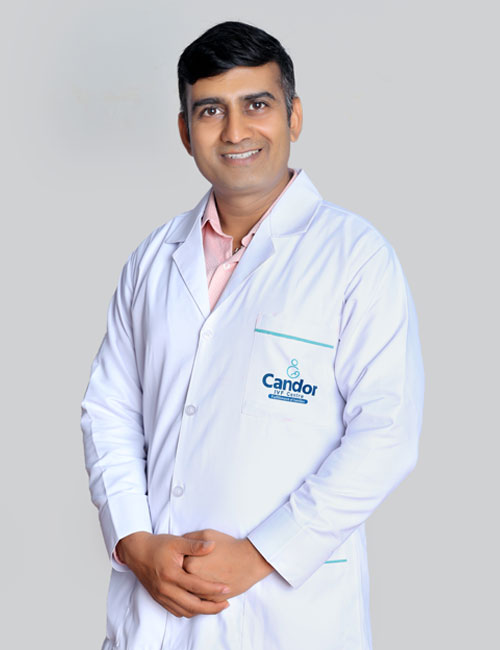
Dr. Jaydev Dhameliya is an IVF consultant and reproductive medicine specialist with over 17 years of clinical experience helping couples on their journey to parenthood. He holds an MBBS and DGO, and is a Fellow in Minimal Access Surgery (FMAS), a trained laparoscopic surgeon. As Founder and Director of Candor IVF, he specialises in IVF, infertility treatment, laparoscopic gynaecological surgery, and high-risk pregnancy management. Every article he authors or reviews reflects current medical evidence and his hands-on patient experience.