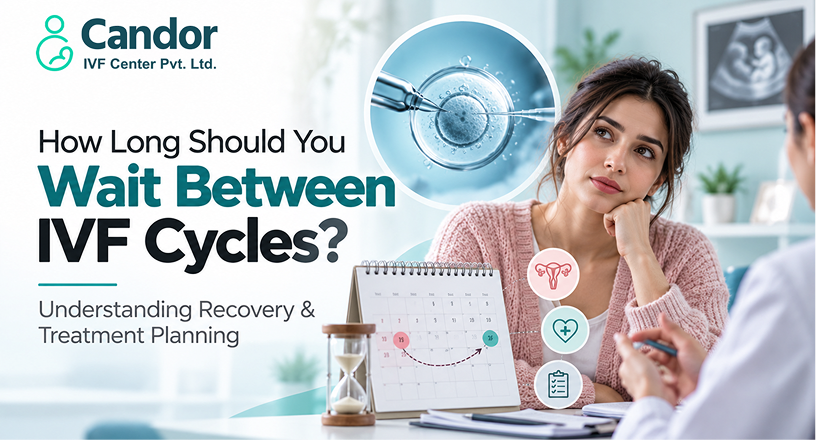


If your last IVF cycle didn’t end in a pregnancy, the question that usually comes next isn’t “should we try again,” it’s “how soon can we.” That urgency is understandable. But the right gap depends less on a fixed number of weeks and more on what happened during your last cycle, and what your body needs before going through stimulation again.
Table of Contents
ToggleWhy a Waiting Period Matters at All
During ovarian stimulation, your ovaries temporarily enlarge as multiple follicles develop, and hormone levels rise well above what a natural cycle produces. After retrieval, your body needs time for hormones to settle back to baseline, ovaries to return to normal size, and the uterine lining to reset. Rushing into another stimulation cycle too soon doesn’t necessarily hurt your chances, but it can make monitoring harder and sometimes delay recovery further.
After a Failed Fresh Cycle
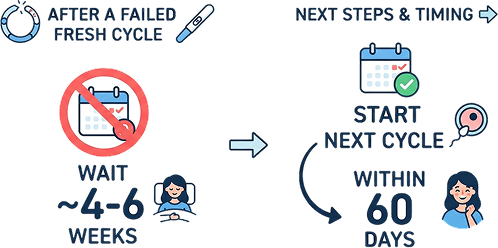
If you went through stimulation, retrieval, and a transfer that didn’t result in pregnancy, most specialists recommend waiting for one full natural menstrual cycle, typically 4 to 6 weeks, before starting again. Recent research has actually challenged the idea that a longer break improves outcomes. A widely cited 2020 study found that women who began their next cycle within 60 days of a failed one had similar pregnancy and live birth rates compared to those who waited significantly longer. Once your period returns and hormone levels have normalized, there’s usually no added benefit to waiting several extra months.
After a Frozen Embryo Transfer
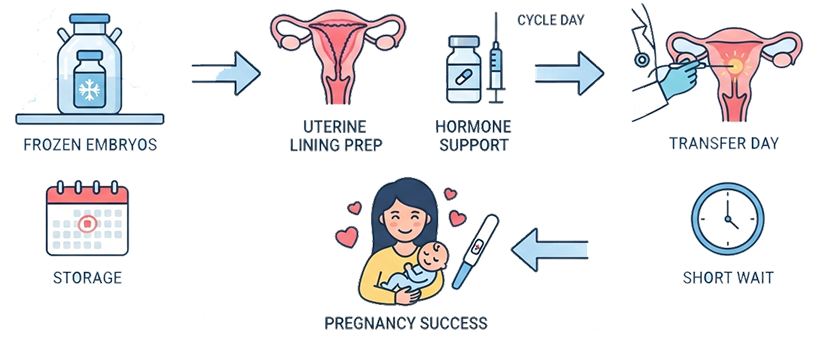
If you have frozen embryos from a previous cycle, the wait is usually shorter, since a frozen embryo transfer (FET) doesn’t involve ovarian stimulation or egg retrieval again. Many patients can move into a FET as soon as their next cycle, once the uterine lining is ready and cleared by their specialist.
After OHSS or a Pregnancy Loss
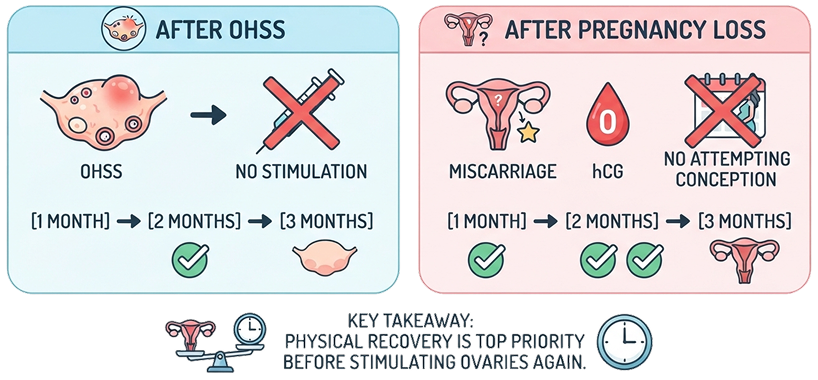
This is where the recommendation genuinely changes. After Ovarian Hyperstimulation Syndrome (OHSS), doctors typically advise waiting two to three months before stimulating the ovaries again, this gap is about physical safety, not pregnancy odds. Similarly, after a chemical pregnancy or early miscarriage, a wait of one to three months is common, to let hCG levels return to zero and allow the uterine lining to fully recover.
It's Not Just About the Body
Physical recovery is only half the picture. IVF is emotionally demanding, and moving straight into another cycle without processing the last one can add strain that makes the next attempt harder, even when your body is medically ready. Most specialists factor in emotional readiness alongside hormone levels and ovarian response before recommending your next step.
How Candor IVF Center Plans Your Next Cycle
At Candor IVF Center, we don’t apply a one-size-fits-all waiting period. Your specialist reviews how your ovaries responded to stimulation, your post-cycle hormone levels, any complications, and where you stand emotionally, before recommending when to begin again. If your last cycle needed protocol adjustments, that review shapes what changes for the next attempt too, so you’re not just repeating the same plan and hoping for a different result.
If you’re weighing your next step after a cycle that didn’t go as planned, book a consultation with Candor IVF Center. Let’s figure out together what your body needs and when you’re truly ready to begin again.
FAQ
Do I have to wait a fixed number of months before my next IVF cycle?
No. For most failed fresh cycles, starting again once your next natural period arrives is considered safe, with research showing no real disadvantage compared to waiting longer.
How long should I wait after developing OHSS?
Most doctors recommend a gap of two to three months after OHSS, to give your ovaries enough time to fully recover.
Is the waiting period shorter for a frozen embryo transfer?
Yes. Since a FET doesn’t involve ovarian stimulation or egg retrieval, many patients can proceed as soon as their next cycle.
Does waiting longer improve my chances of success in the next cycle?
Not necessarily. Studies show similar pregnancy and live birth rates whether patients wait around 60 days or longer, as long as the body has recovered.
How does Candor IVF Center decide when I should start my next cycle?
Your specialist reviews your ovarian response, hormone recovery, any complications, and your emotional readiness, then builds a personalized recommendation rather than following a generic timeline.

Dr. Jaydev Dhameliya is an IVF consultant and reproductive medicine specialist with over 17 years of clinical experience helping couples on their journey to parenthood. He holds an MBBS and DGO, and is a Fellow in Minimal Access Surgery (FMAS), a trained laparoscopic surgeon. As Founder and Director of Candor IVF, he specialises in IVF, infertility treatment, laparoscopic gynaecological surgery, and high-risk pregnancy management. Every article he authors or reviews reflects current medical evidence and his hands-on patient experience.