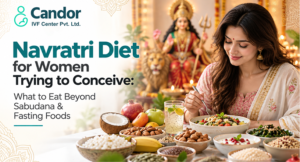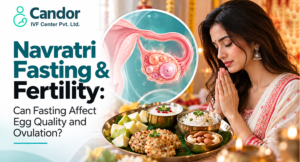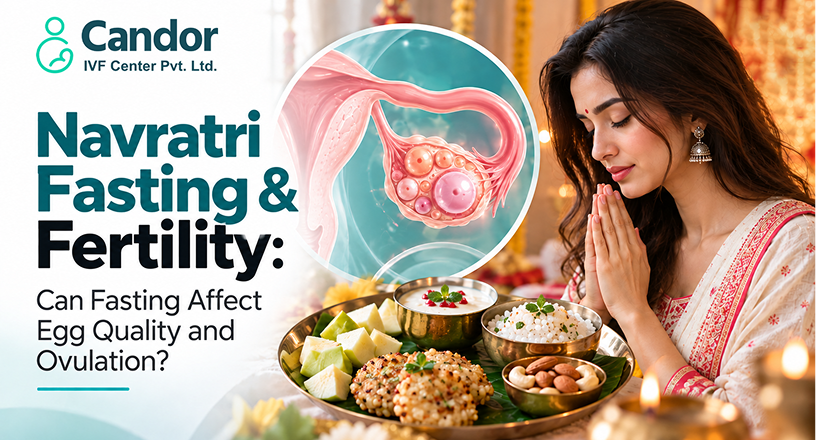
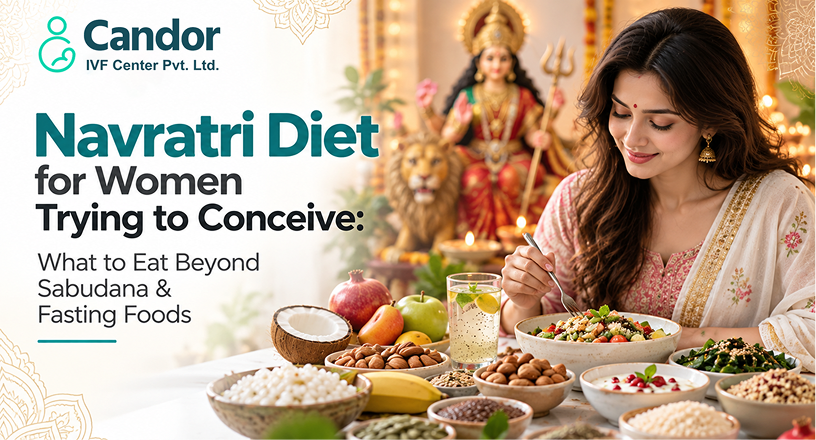

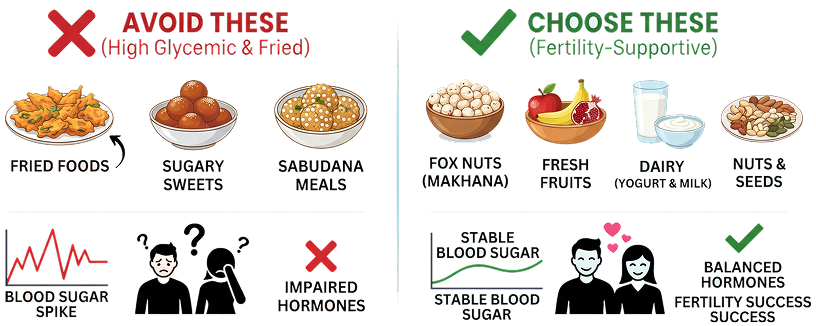

Most Navratri thalis lean heavily on sabudana khichdi, fried potatoes, and kuttu puris, and while these are traditional and satisfying, they don’t do much for a woman actively trying to conceive. The good news is that vrat-friendly eating has plenty of room for nutrient-dense choices that support fertility, without breaking any fasting rules.
Table of Contents
ToggleWhy What You Eat During These Nine Days Actually Matters
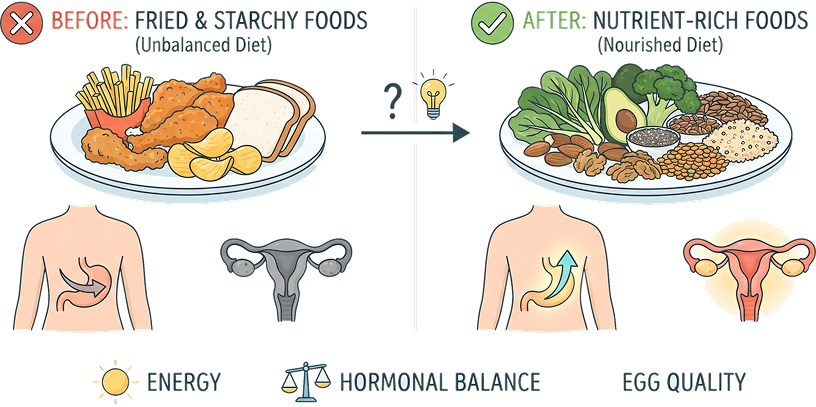
Egg quality and hormonal balance depend heavily on nutrients like folate, zinc, antioxidants, and healthy fats. When a fast is built almost entirely around fried, starchy foods, it can leave these gaps unfilled for over a week, at a time when the body could genuinely benefit from consistent nourishment. This doesn’t mean giving up tradition. It means choosing the fasting-approved foods that happen to also work in your favor.
Fertility-Friendly Foods That Fit Within a Navratri Fast
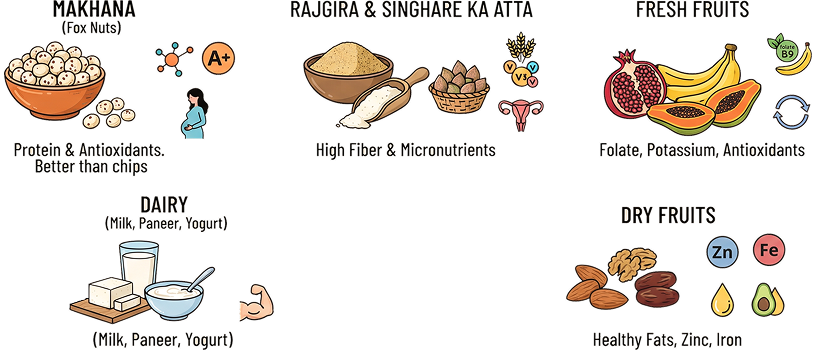
Makhana (fox nuts)
a vrat staple that is also rich in protein and antioxidants, making it a far better snack choice than fried chips.
Rajgira (amaranth) and singhare ka atta (water chestnut flour)
good alternatives to refined sabudana-based dishes, offering more fiber and micronutrients while staying fasting-compliant.
Fresh fruits like pomegranate, banana, and papaya
bring folate, potassium, and antioxidants that directly support reproductive health, and double as easy, hydrating snacks between meals.
Paneer, milk, and yogurt
provide protein and calcium, both important for hormonal function, and offer a welcome break from the starch-heavy dishes that dominate most vrat menus.
Dry fruits such as almonds, walnuts, and dates
offer healthy fats, zinc, and iron in small, fasting-friendly portions.
Hydration Deserves as Much Attention as Food
Coconut water, fresh lime water with rock salt, and simple buttermilk are all fasting-appropriate and help maintain electrolyte balance through the day, which matters more than most people realize when trying to conceive. Dehydration adds stress to the body, and steady hydration supports everything from cervical mucus quality to overall hormonal function.
How Candor IVF Center Guides Patients on Fertility Nutrition During Festivals
At Candor IVF Center, nutrition guidance is always built around a patient’s specific hormone profile, AMH levels, and treatment stage rather than generic diet advice. For patients trying to conceive naturally or preparing for a cycle, doctors often suggest weaving in fertility-supportive vrat foods like makhana, dairy, and fruits instead of relying on fried, high-glycemic options through the festival. This becomes especially relevant for patients managing conditions like PCOS, where blood sugar spikes from sabudana-heavy meals can work against the very hormonal balance the treatment is trying to support.
Conclusion
Navratri fasting and fertility-friendly eating are not at odds with each other. Swapping a few fried, starch-heavy staples for makhana, fruits, dairy, and dry fruits keeps the fast intact while giving your body the nutrients it actually needs during these nine days. If you are trying to conceive or preparing for treatment, a quick conversation with your specialist at Candor IVF Center can help you build a Navratri diet that supports both your traditions and your fertility goals.
FAQ
Can I eat protein-rich foods during Navratri fasting?
Yes. Paneer, milk, yogurt, and dry fruits are all fasting-compliant and offer protein your body needs, especially if you’re trying to conceive.
Are fried vrat foods harmful for fertility?
Not harmful occasionally, but relying on them daily for nine days can crowd out more nutrient-dense options that better support hormonal balance.
What should women with PCOS eat during Navratri, according to Candor IVF Center?
Doctors generally recommend limiting sabudana-heavy meals and favoring makhana, dairy, and fruits to help manage blood sugar and support treatment goals.
Is coconut water a good fasting drink for fertility?
Yes. It supports hydration and electrolyte balance, which matters for overall hormonal health during a multi-day fast.
Should I change my Navratri diet if I'm undergoing IVF at Candor IVF Center?
It’s worth discussing with your specialist, since your treatment stage and hormone levels may call for specific dietary adjustments during the festival.

Dr. Jaydev Dhameliya is an IVF consultant and reproductive medicine specialist with over 17 years of clinical experience helping couples on their journey to parenthood. He holds an MBBS and DGO, and is a Fellow in Minimal Access Surgery (FMAS), a trained laparoscopic surgeon. As Founder and Director of Candor IVF, he specialises in IVF, infertility treatment, laparoscopic gynaecological surgery, and high-risk pregnancy management. Every article he authors or reviews reflects current medical evidence and his hands-on patient experience.