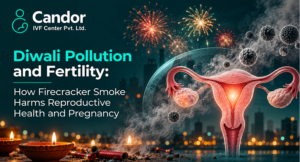

Every year, the morning after Diwali, the air over many Indian cities turns thick, grey and hard to breathe. That same smoke does not stop at your lungs. The tiny particles in it travel into your bloodstream, and from there they can reach your ovaries, your sperm and a developing baby. If you are pregnant or trying to conceive, the air you breathe during Diwali week deserves as much attention as anything on your plate.
Table of Contents
ToggleWhat Is in Cracker Smoke
Firecrackers release fine particles known as PM2.5 and PM10, along with gases such as sulphur dioxide, nitrogen oxides and carbon monoxide. The bright colours come from metal compounds that end up in the air as well. In the cool, still weather of this season, the smoke lingers close to the ground and adds to pollution that many cities already carry.
How Polluted Air Reaches Your Reproductive System
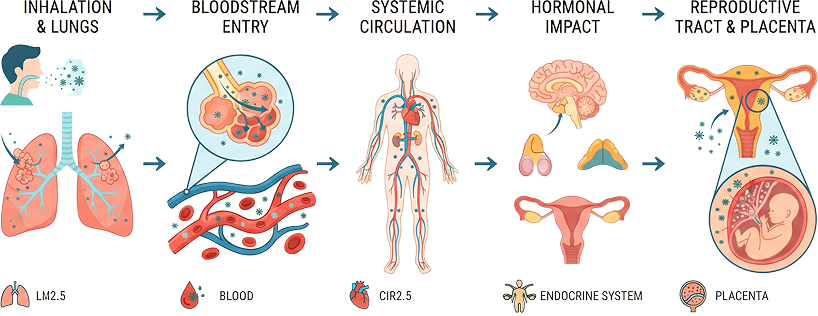
PM2.5 is small enough to pass from the lungs into the blood. Once there, it triggers inflammation and oxidative stress, which damage cells, and it can interfere with the hormones that regulate ovulation and sperm production. In pregnancy, these particles and their by-products can affect the placenta, which supplies the baby with oxygen and nutrients.
What Pollution Can Do to Women's Fertility and Pregnancy
Ovarian health
Studies link higher exposure to polluted air with lower ovarian reserve and more irregular cycles.

Time to conceive
Women living in more polluted areas have been found to take longer to conceive, and some studies report lower success with fertility treatment.
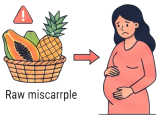
Miscarriage
Research connects air pollution with a higher risk of early pregnancy loss.
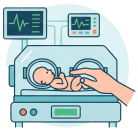
Preterm birth and low birth weight
Polluted air is consistently linked to babies born too early or too small, and to breathing problems after birth.
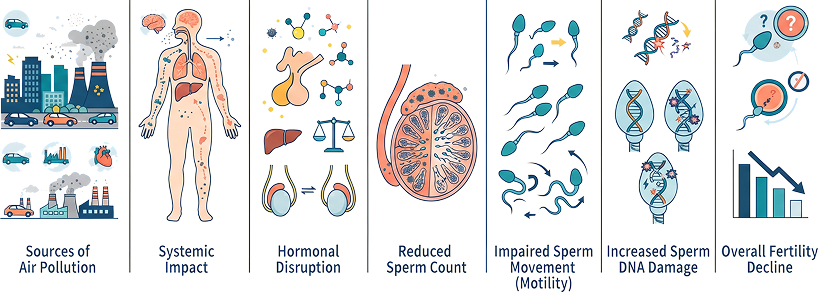
What It Does to Men's Fertility
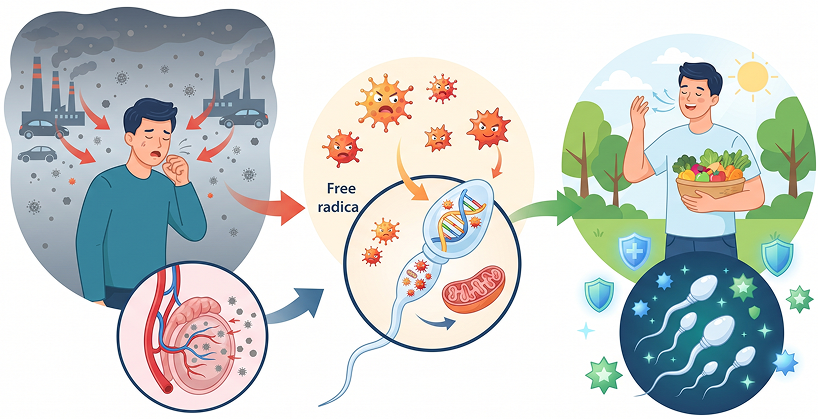
Sperm are sensitive to oxidative stress. Studies associate air pollution with lower sperm count, reduced movement and more DNA damage in sperm, all of which can make conception harder. Men are rarely told this, yet it matters as much as anything on the woman’s side.
How to Protect Yourself During Diwali Week
Keep an eye on your local AQI and stay indoors when it is poor, especially on Diwali night and the following morning.
A well-fitting N95 mask filters most fine particles outdoors. Cloth and surgical masks offer much less protection.
Close windows during peak smoke hours and use an air purifier with a HEPA filter if you have one.
Move your walk indoors when the AQI is high.
If you are pregnant and notice breathlessness, a persistent cough or chest discomfort, contact your doctor.
A Cracker-Free Diwali
You can honour the festival without adding to the smoke. Lighting diyas, creating rangoli, decorating with string lights and sharing sweets all carry the spirit of Diwali. Choosing a quiet celebration also protects neighbours, children and elderly relatives who share the same air.
How Candor IVF Center Considers Environmental Factors
Pollution is one of several factors that can affect fertility, and it is rarely the only one. At Candor IVF Center, the evaluation begins with your history, including your cycles, daily environment and any earlier pregnancies. Your doctor then selects tests according to your needs, such as an ultrasound, hormone and ovarian reserve tests for women, and a semen analysis for men. Not everyone needs every test. The results help your doctor separate environmental influences from other causes and plan the next step with you.
FAQ
Can one Diwali night cause infertility?
Not on its own. The concern is repeated exposure, and Diwali smoke is an avoidable addition to air that is already polluted.
Is cracker smoke harmful during pregnancy?
Yes. Polluted air is linked to preterm birth and low birth weight, so pregnant women should limit exposure and speak to their doctor.
Does an N95 mask really help?
A properly fitted N95 filters most fine particles. Cloth and surgical masks filter far fewer.
How long does Diwali pollution last?
It usually peaks around Diwali night and the next morning and can stay high for several days, depending on the weather.
Does air pollution affect sperm quality?
Studies link it with lower sperm count, motility and DNA integrity.
Should I postpone fertility treatment because of Diwali?
Your doctor can advise on timing. Reducing exposure during the peak days is sensible.
A Brighter Diwali Starts With Cleaner Air
The light of Diwali does not depend on smoke. A few protective habits during the festival, and a cracker-free celebration at home, protect your health and the family you are hoping to build. If you are planning a pregnancy or have been trying for some time without success, a conversation with a fertility specialist, such as the doctors at Candor IVF Center, can help you understand your situation and the steps ahead.