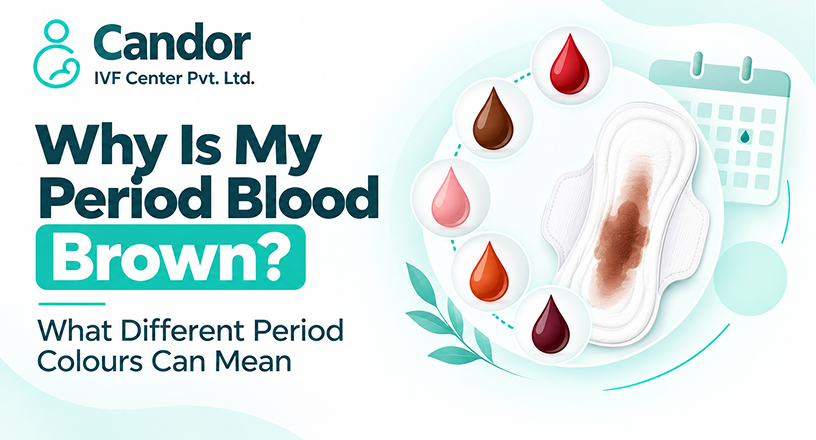


Seeing brown blood where you expected red can be startling. Most of the time it is completely harmless, but period colour does carry clues about your cycle, your hormones and occasionally your health. Knowing what each shade usually means helps you tell an ordinary change from one worth checking.
Table of Contents
ToggleWhy Period Blood Changes Colour
The colour depends mainly on how long the blood has been in your body. Fresh blood is bright red. Blood that has had time to react with oxygen darkens, moving from dark red to brown and sometimes almost black. A slow flow gives the blood more time to darken, which is why colours shift across the days of a single period.
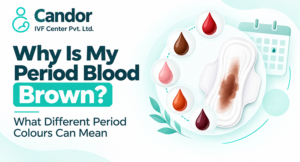
What Each Colour Usually Means

Bright red
Fresh blood, usual on the heavier days of a period.

Dark red
Blood that has been in the uterus a little longer, common at night or towards the end of heavy days.

Brown or black
Older blood leaving the body slowly, most often at the start or end of a period.

Pink
Light bleeding mixed with clear cervical fluid, often seen with spotting or a very light flow.

Orange
Blood mixed with cervical fluid. If it comes with a strong smell, itching or discomfort, an infection is possible.
Grey
This is unusual and may point to an infection or, in pregnancy, to tissue passing, so it needs prompt medical attention.
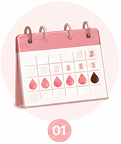
A change in colour within a period is normal. What matters is a pattern that is new for you or that comes with other symptoms.
Why Your Period Blood May Be Brown

The beginning or end of your period
Leftover blood from the last cycle often appears as brown spotting just before or after your period.
A light or slow flow
Slow bleeding gives blood time to oxidise and turn brown.

Hormonal changes
Stress, weight changes, a new contraceptive or stopping one can alter the lining and the bleeding pattern.
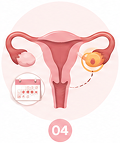
Ovulation spotting
Some women notice a little brown or pink spotting in the middle of the cycle.
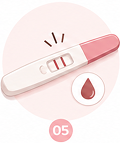
Implantation bleeding
Light brown or pink spotting around the time your period is due can occur in early pregnancy. A pregnancy test gives a clearer answer.

After childbirth
Bleeding that turns brown is common in the weeks after delivery.
Perimenopause
Cycles become irregular, and bleeding colour and amount can vary.

When Brown Blood Deserves a Check
Occasional brown blood at the edges of a period needs no action. See a doctor if brown discharge keeps appearing between periods or lasts for weeks, comes with a strong smell, pain or fever, or follows unprotected sex when pregnancy is possible. Seek help promptly if you are pregnant and notice any bleeding, or if you soak through a pad every hour for several hours. Persistent spotting each cycle can sometimes link to conditions such as PCOS, endometriosis, low progesterone or polyps, which a doctor can investigate.
How Candor IVF Center Evaluates Unusual Bleeding
When bleeding patterns keep changing, or you are trying to conceive, understanding the cause matters more than guessing. At Candor IVF Center, the evaluation begins with your history, including the colour and timing of your bleeding, your cycle length, other symptoms and any earlier pregnancies. Your doctor then selects tests according to your needs. A pregnancy test and an ultrasound of the uterus and ovaries are common first steps, and hormone tests, including thyroid and progesterone, or a swab if infection is suspected, may be added. Not everyone needs every test, and often the explanation turns out to be simple.
FAQ
Is brown period blood normal?
Yes. It is usually older blood and commonly appears at the start or end of a period.
Can brown blood be a sign of pregnancy?
Sometimes. Light brown spotting around the time your period is due can be implantation bleeding, so take a pregnancy test.
Why do I get brown spotting before my period?
It is often just leftover blood or a hormonal shift. If it happens every cycle, mention it to your doctor.
Does brown blood mean I have an infection?
Not by itself. An infection is more likely when it comes with a strong smell, itching or pain.
Are blood clots in my period normal?
Small clots are common. Large clots or frequent ones with heavy bleeding should be checked.
Can the colour of my period affect fertility?
The colour itself does not, but the conditions behind some changes, such as PCOS or endometriosis, can.
Your Period Is a Clue, Not a Verdict
Colour changes are part of a normal period, and brown blood is most often a sign of slow, ordinary flow. Noting the colour, timing and any symptoms for a few cycles shows you what is typical for you. If a pattern is new, persistent or worrying, a gynaecologist or fertility specialist can help you find out why.

Dr. Jaydev Dhameliya is an IVF consultant and reproductive medicine specialist with over 17 years of clinical experience helping couples on their journey to parenthood. He holds an MBBS and DGO, and is a Fellow in Minimal Access Surgery (FMAS), a trained laparoscopic surgeon. As Founder and Director of Candor IVF, he specialises in IVF, infertility treatment, laparoscopic gynaecological surgery, and high-risk pregnancy management. Every article he authors or reviews reflects current medical evidence and his hands-on patient experience.